
Literary Firsts: The Castle of Otranto
Around this time last year, I took you on a short exploration of the history of Gothic fiction, in which I mentioned a certain text that kick-started the genre: The Castle of Otranto, by Horace Walpole. Now, I'm a curious soul who really likes old books, so naturally I put this on my list of things to read. I recently got around to it, and y'all. Y'all. I need to share this absolute gem with you.
Note: there will be spoilers below! You can read The Castle of Otranto via Project Gutenberg for free here; it's not a long read, so go ahead and do that first if you like. I'll wait.
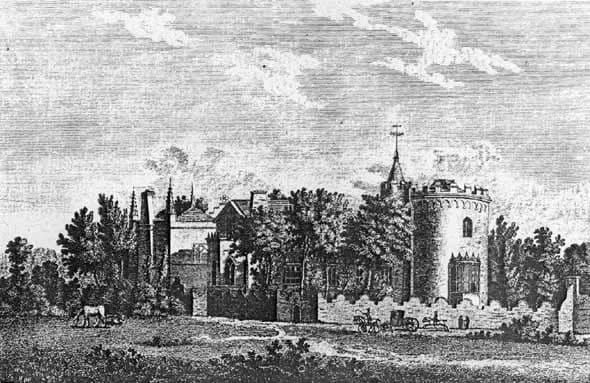
In 1764, Horace Walpole slept in the Gothic castle he had designed and built for himself, Strawberry Hill House. It was not an easy slumber; he woke from a nightmare in which he found himself in an ancient castle, where at the head of a great staircase he saw a "gigantic hand in armour". That very evening, he began to write a story around the impressions lingering from his dream, and two months later The Castle of Otranto was complete.
Walpole published his book under the pseudonym William Marshal, with the pretext that it was a translation of a recently rediscovered 16th-century text from Naples that itself retold a story from centuries earlier. The "translation" was an immediate success, though once Walpole admitted that he'd made the whole thing up himself the critics roundly turned on him and derided The Castle of Otranto as being a mere superficial romance. Nevertheless, its literary legacy was quick to rise, and other Gothic novels using Walpole's pattern soon emerged in force.
There are a lot of elements in the plot of The Castle of Otranto that would become staples of Gothic fiction:
- The medieval setting, particularly the gloomy, rambling castle with its secret passages and hidden trapdoors
- A curse laid upon Prince Manfred's family because of an ancestor's wickedness
- Supernatural happenings leading to the fruition of the curse, including giant ghostly hands, animated paintings, and (notably) the death of Manfred's son by way of a mysterious giant helmet that falls from the sky
- The threat of unwanted advances to maidenhood, embodied by the characters of Manfred and Frederic scheming to marry each other's daughters without said daughters' consent
- The reveal that the so-called peasant Theodore is in fact the long-lost son of Friar Jerome, who is himself discovered to be a count by birth, and also the true heir of Otranto
- Tragic death due to misunderstandings, specifically Manfred's murder of his own daughter when he mistakes her for his intended fiancee, who he wrongly believes to be cheating on him with Theodore
Some of these plot points come across as rather absurd or contrived now (especially the killer helmet), but at the time they would have still felt fresh, tying into existing conventions of romances while experimenting with something new and untested.
One of the most innovative aspects of The Castle of Otranto is the way in which Walpole deliberately blended fantastic and supernatural elements such as spirits, curses, and enchanted helmets plummeting fatally to earth with literary realism, where the characters respond and behave in a comparatively natural way. The juxtaposition of bizarre and unreal events with a real-world framework is a technique that blurs the line between fact and fiction in a way that makes the terrors of the page feel tantilisingly plausible. Little wonder, then, that Gothic and horror stories have made a lot of use of, from Frankenstein and Dracula all the way to The Blair Witch Project.
Over the centuries since its publication, The Castle of Otranto has fallen into relative obscurity, having been overshadowed by more popular Gothic thrillers that came after it. Its influence, however, cannot be overstated. The genre of Gothic fiction has shaped so much of our culture and the way we engage with things that go bump in the night, and it's all thanks to one medieval-obsessed English gentleman and a weird dream he had one night.
Member discussion